
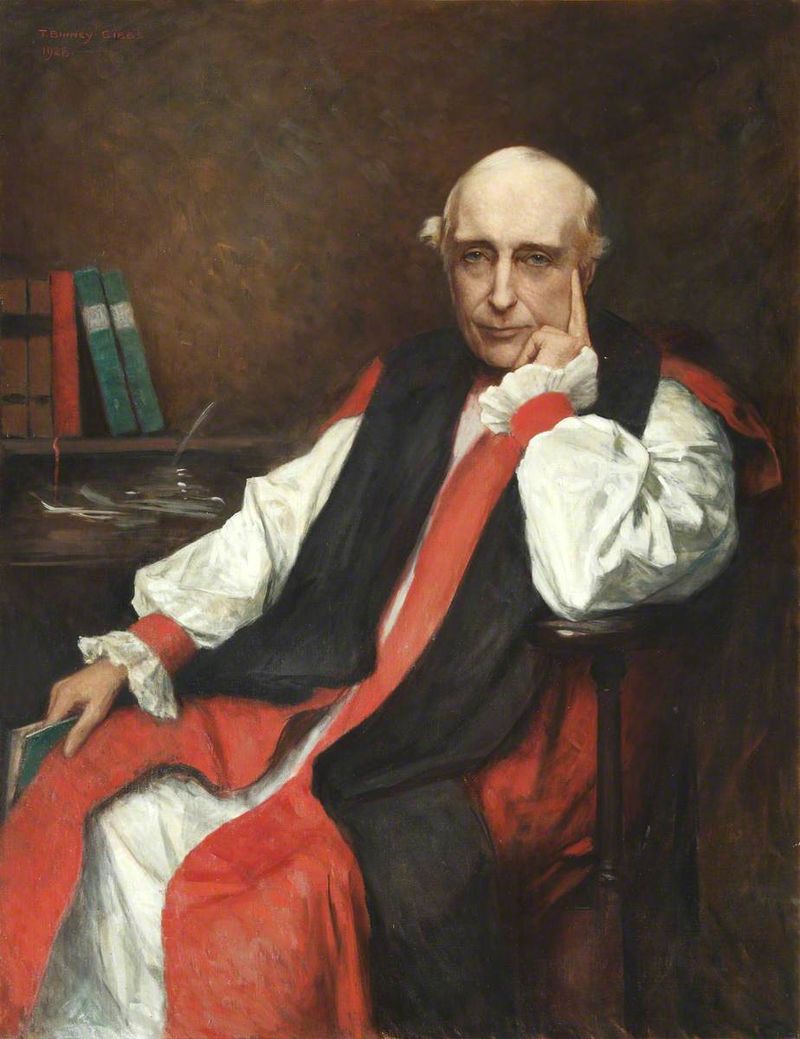
During our research a name that crops up regularly is Rt. Revd. Francis James Chavasse. He was the second Bishop of Liverpool from 1900 to 1923 and the Liverpool Cathedral we see today was his idea, his vision.
Much of his life was spent in Oxford, where he was first a student, then becoming Rector of the church of St. Peter-le-Bailey and Principal of Wycliffe Hall (a theological college). In later life he founded St. Peter’s Hall, now an Oxford College. What concerns us here though is his role as Bishop of Liverpool in Wigan, 20 or so miles away from the mighty Cathedral and right at of the edge of his Diocese.
During a visit to Wigan in 1905 he spoke at All Saints, the Parish Church, sharing his thoughts about the state of the church in the Deanery. It makes fascinating reading showing his knowledge and commitment as well as giving a valuable insight into the area at the time. It complements our research with descriptions of churches, clergy and the condition of the areas they served.
After visiting the churches in the Liverpool, he writes ‘it is natural that I should next turn to the second chief town of the diocese and visit the deanery which has for its centre the ancient Parish and Church of Wigan.’ He says that the Deanery has a population of 163,000 which in some parts is steadily growing. It is divided into 22 parishes, served by 24 churches and a staff of 43 clergy. Six of its parishes contain over 10,000 people. He shares the plans to found new parishes and to extend existing churches.
He speaks of the three parishes which stand apart on the beautiful hills that rise round the town and are in the midst of the country. One of these, the church of St. Aidan’s in Billinge, he describes as being quaint and picturesque, in need of renovation and extension. ‘Its single exit would be a real source of danger in any sudden panic, and its holy table, reading desk and pulpit are crowded too closely together for seemliness and reverence. In no church in the diocese are the confirmations better arranged, in none are they conducted by the Bishop with greater difficulty.’
St. David’s church in Haigh, he says, is well-appointed holding reverent services with a generous supporter in the Lord of the Manor, the 26th Earl of Crawford, who the Bishop must have met on his visits to Wigan. The chapel-of-ease in New Springs (later St. John the Baptist) is doing excellent work but ‘additional clerical or lay help is its chief need.’
The needs of Abram, a mining village, are, he goes on, great. 6,500 people live there and the population is rising. The present building (he is referring to the original church built in 1838) is described as one of the ‘poorest’ in the diocese and is showing serious signs of decay. Before long it is hoped that a new, larger and more comely church may takes its place (St. John the Evangelist, finally consecrated in 1937.)
A mission hall or a chapel-of-ease ought to be planted at Bamfurlong and Revd. Tremlow, the Vicar of Abram, ought not to be allowed to work without a curate. During the past year a generous family, the Johnsons, have built a beautiful church at Bickershaw (St. James and St. Elizabeth) as a memorial to their parents, which will ‘take away from the mother church some 1,600 souls.’
Continuing his review of Wigan the Bishop turns to Hindley, with its 25,000 people and four churches. ‘At All Saints, the vicar is working alone amongst 10,000 people, and, although ably assisted by some of his laity is all but overwhelmed by the impossibility of shepherding so great a flock.’
St. John the Evangelist at Hindley Green had been made into a separate parish since the Bishop’s last visitation. Its vicar is toiling alone amongst 4,500 people. He has, we’re told, secured with the help of an ‘active committee’, a site for a vicarage close to the church, and a considerable sum of money towards its building. He greatly needs an assistant curate and a building the curate can use as a Sunday School for children in the south of his parish.
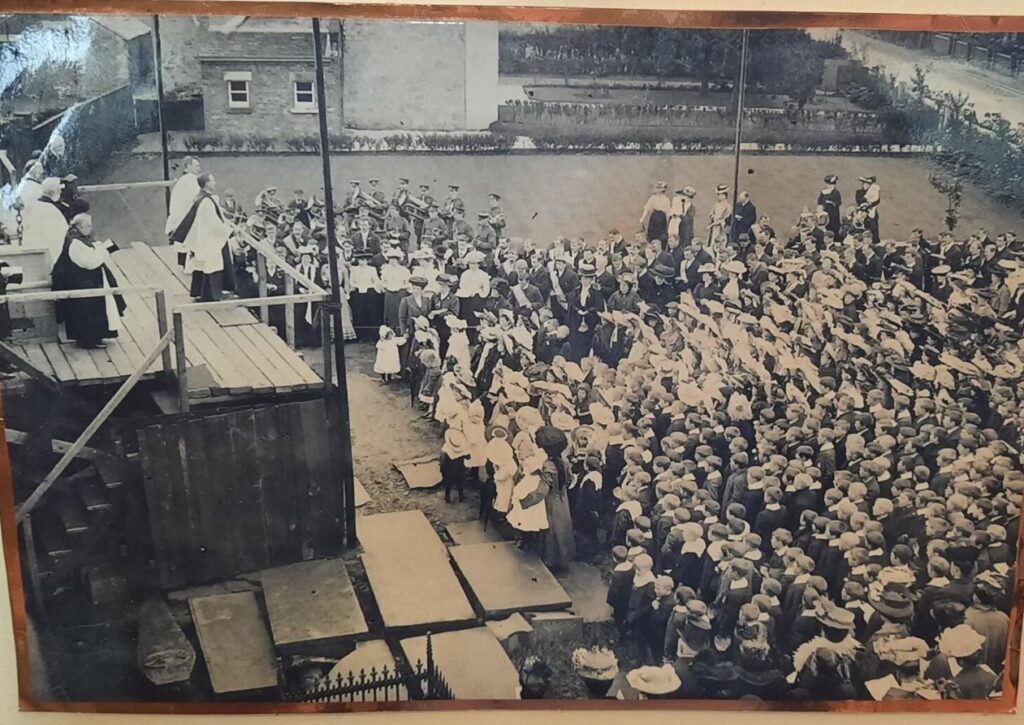
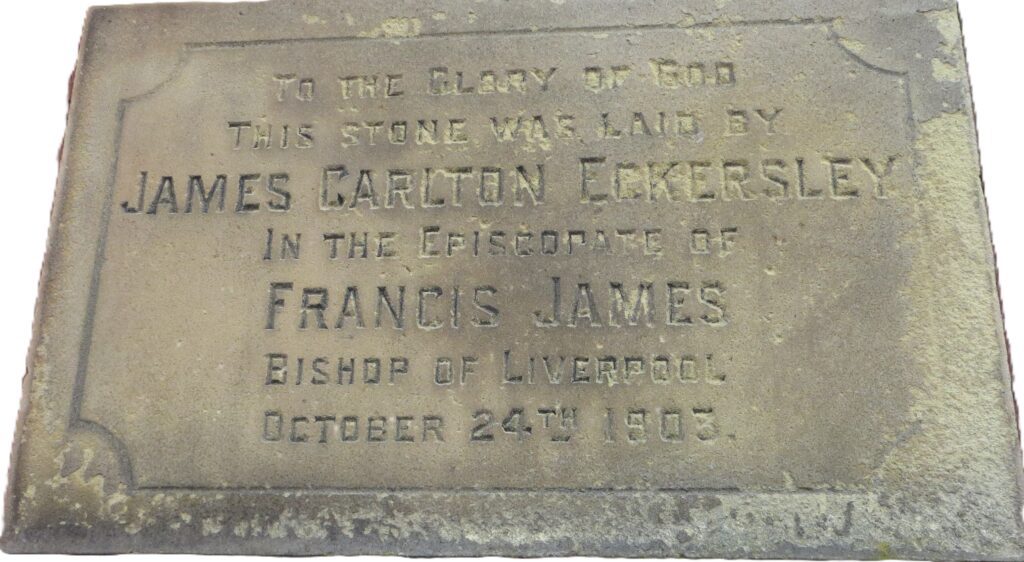
The large parish of St. Peter’s, Hindley had, after long years of anxious waiting, been divided. A wealthy benefactor of the church (James Carlton Ecklersley) had made it possible to replace the iron structure (tin tabernacle) in which services were held for so long, by the fine new church of St. Nathaniel in Platt Bridge. Of the parish he writes, ‘God has greatly prospered the work there, and the vigour and enthusiasm of clergy and people are helping to overtake terrible areas of work.’
Travelling north he reviews Ince. He celebrates the fact that 2,500 children attend Sunday School in the parishes. He comments, ‘I am thankful to notice signs of real revival and progress after years of difficulty and depression. There are few more difficult spots to work for Christ in the diocese on account of the want of cohesion amongst its people, who have been gathered from all parts of the country, and on account of their migratory patterns.’ The Bishop mentions Pemberton and Goose Green and tells us that Revd. Wood at St. Matthew’s, Highfield, ‘has produced solid fruit, and has won the esteem and affection of his people’. Of All Saints, the Parish Church, in which Bishop Chavasse was speaking he speaks of the ‘great traditions, noble building and large diligent staff’.
He describes St. Michael and All Angels in Swinley as ministering to the wealthier section of the Wigan people, he says, ‘I trust that its congregation, which is probably the most influential in the town, will be able at no distant time to assist, with workers, and with alms, the poorer parishes in its neighbourhood’. Revd. Poulter has taken over at St. Catharine’s church, Scholes, a contrasting area, from the ‘gentle and lovable Revd. Dury’ and is making the church a growing force for Christ and righteousness in his enormous parish ‘in need of two chapels-of-ease.’ The staff of two at St. Thomas’s (in Caroline Street) are quite inadequate for its population. And so the speech continues.
He concludes, ‘On the whole, while there is much to humble and to cause anxiety in the condition of Church work in parts of the Deanery, there are signs of real vigour and bright promise for the near future’.
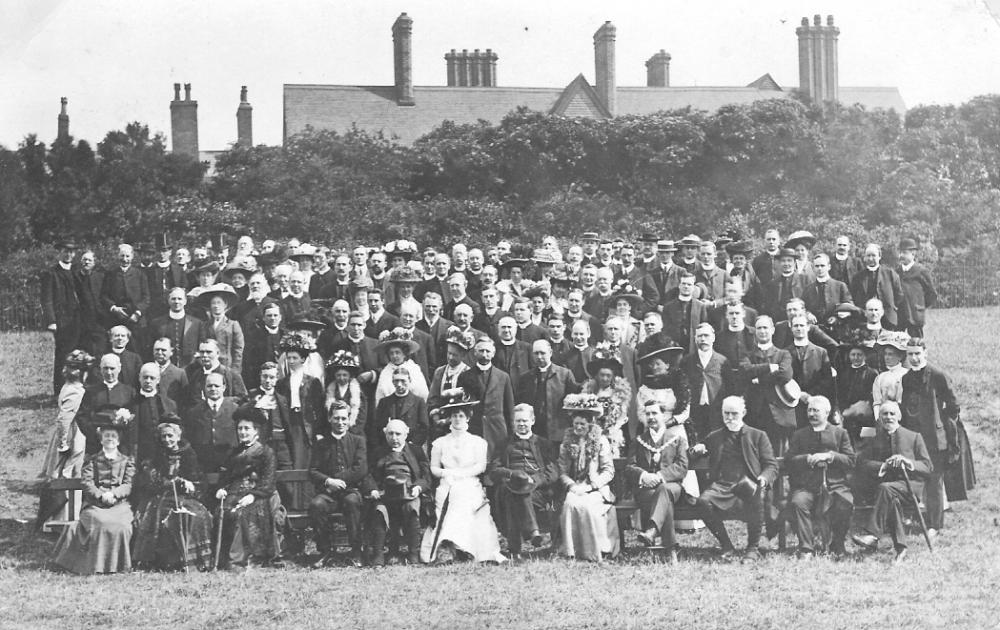
We are fascinated by the Bishop’s relationship with the Wigan area. He is a constant visitor showing genuine concern and interest in the churches and their congregations. We will write more about more his visits to Wigan in due course.
© Who Built Wigan's Churches 2024 - .
All rights reserved.