
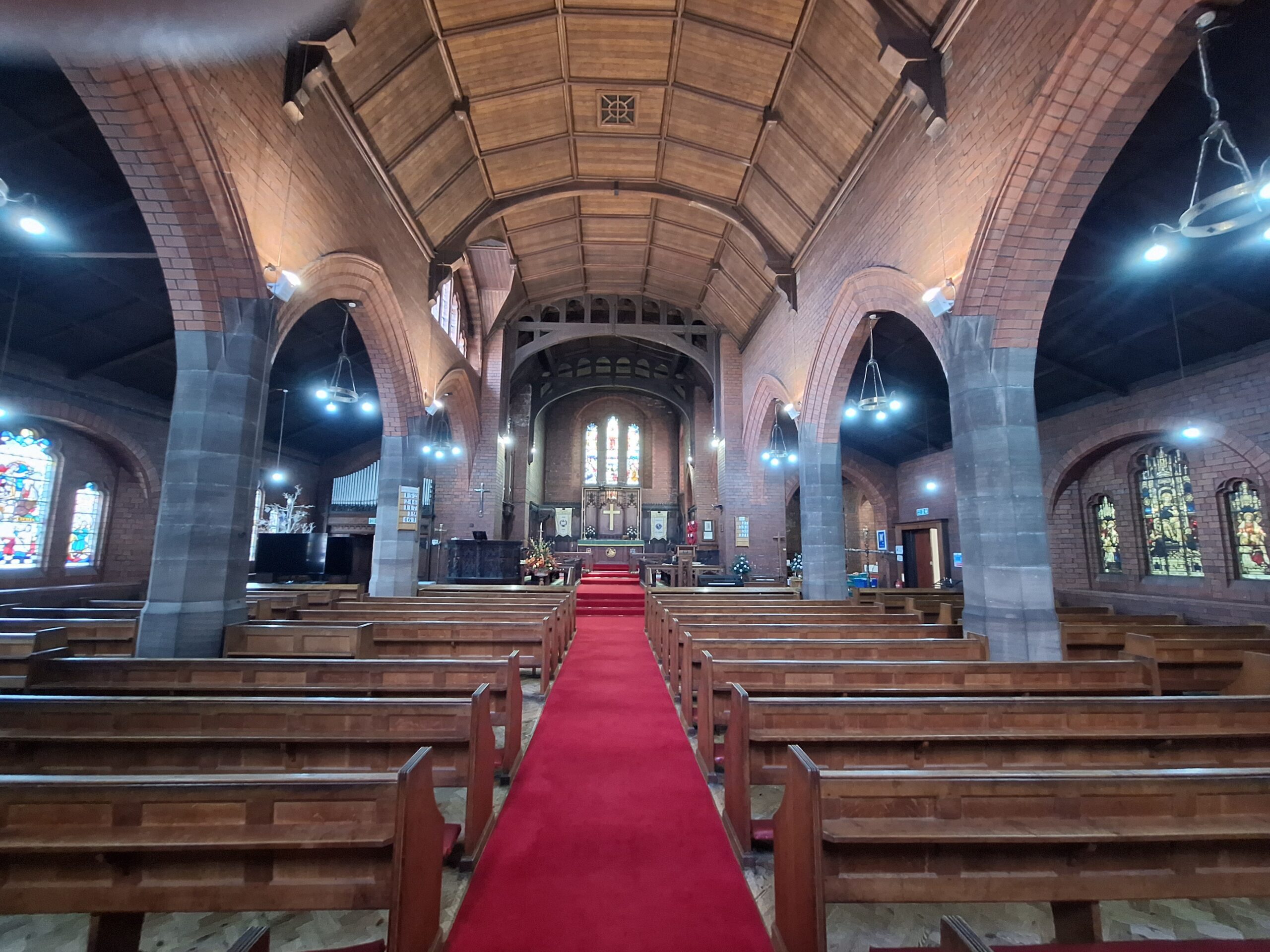
St. John’s is a neat, red brick church built, like the nearby churches in Bickershaw and Platt Bridge at the turn of the twentieth when coal and cotton were king, and the population of the area was increasing.
As is often the case, the church began in the school building. The new school on the main road was licenced for divine service on 11th November 1879 with regular services taking place from that date.
The idea of a ‘proper’ church building soon began to take shape. In 1894 Roger Leigh of Hindley Hall promised a site and a Church Building Fund was set up.
The church cost £4,750. Thanks to the ‘liberality of Churchmen’ the sum was raised quickly with James Carlton Eckersley of the mill owning family donating £1,799. He laid the Foundation Stone which can be seen inside the church. A rare photograph exists showing the church being built. It was consecrated on 28th October 1899.
Red brick is used both outside and inside with stone being used for details. The pillars, made of stone, have no traditional capitals and merge gently into the arches above. The chancel is demarked by two impressive wooden arch braces making the church more imposing. The architect was Charles E. Deacon, a Liverpool architect who built other churches and schools in the North West. The influence of the Arts and Crafts Movement is clear and St. John’s is very different, more up to date, than other Wigan churches of a similar date.
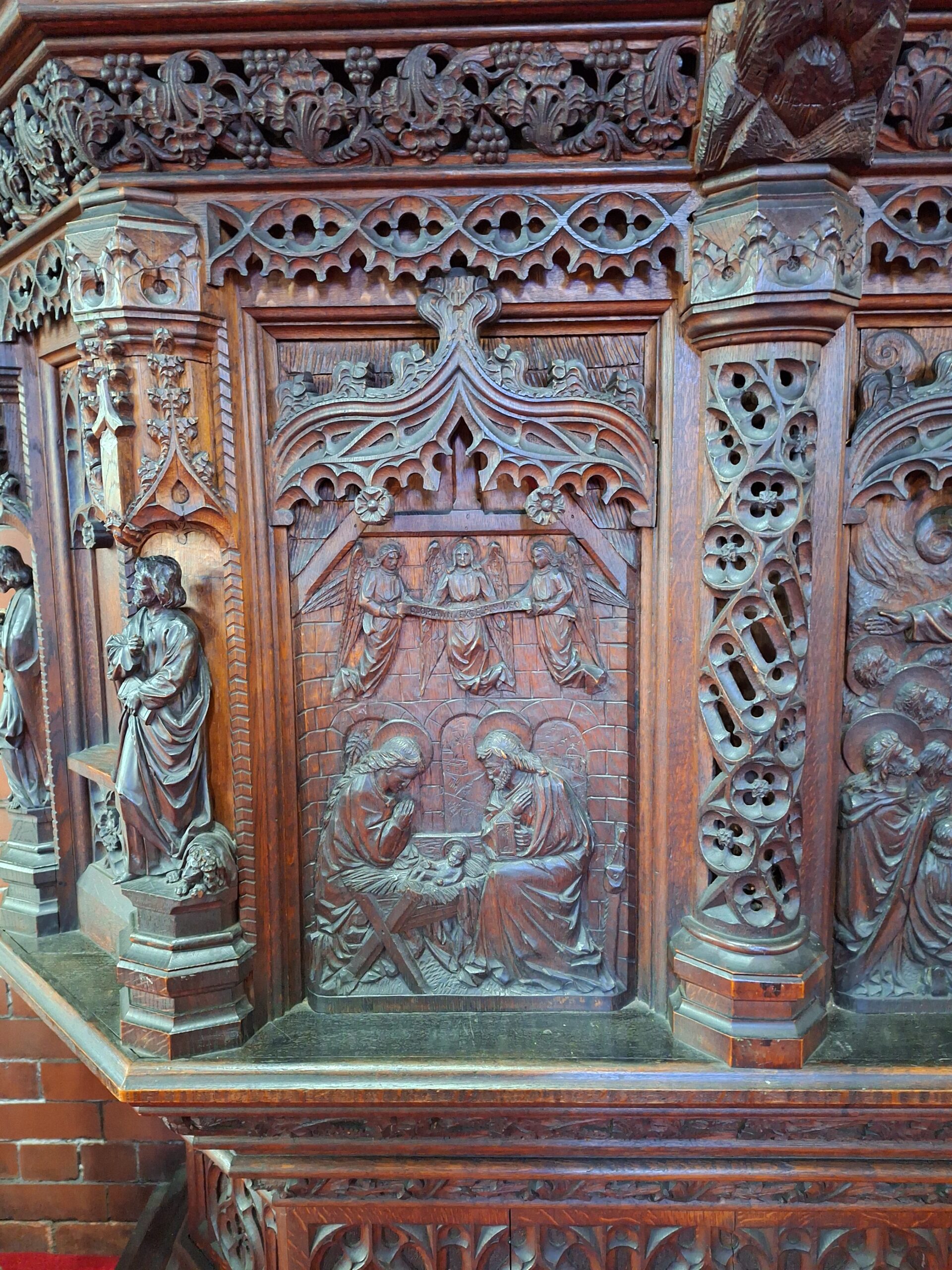
The pulpit and choir stalls are the work of the Derbyshire wood carver, Advent Hunstone. Look out for the Nativity scene on the former, the misericord seats on the latter. Hunstone’s work is to be seen in other Wigan churches most notably St. Andrew’s in Springfield.
To raise money for these furnishings, a three day ‘Merrie England’ Bazaar was held in the schools in 1909. The event was accompanied by a beautifully illustrated programme with adverts ranging from Deep Arley Coal to Croft’s Noted Tripe.
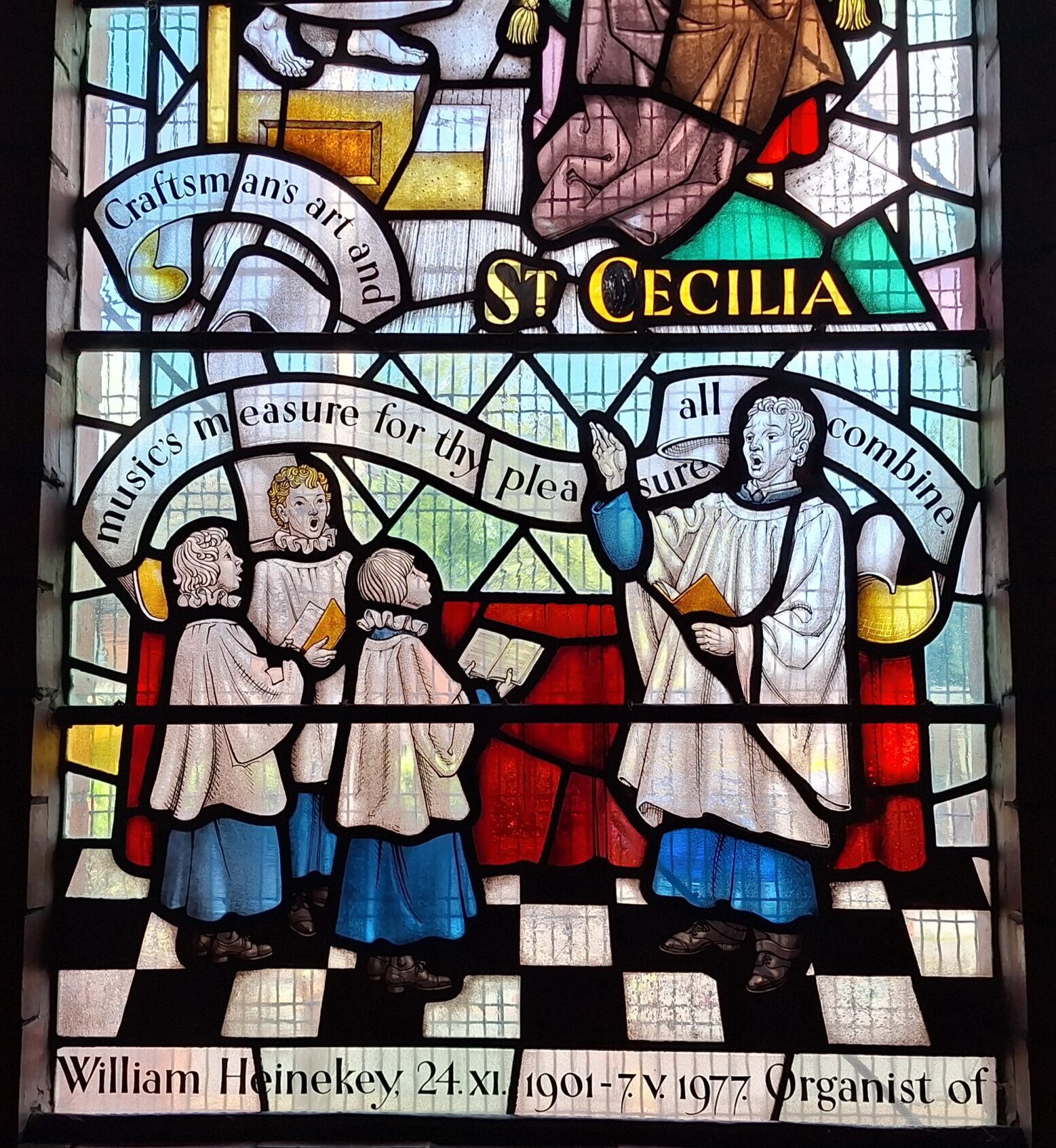
Some of the stained glass windows are in memory of long serving churchwardens. Our favourites were designed after the Second World War by Harcourt Doyle of Liverpool. One of his windows, in memory of James Swift, shows St. John’s Ambulance volunteers helping a sick man in a wheelchair (was Mr Swift a volunteer himself?). And the next window remembers William Heinekey, organist for 50 years. The window reflects his love of music, with depictions of the composers Bach and Beethoven, and of a choir master conducting his choir boys.
The pews were installed in 1948 replacing chairs. Some were paid for by the church organisations and the names of the groups are recognised by labels on the pew ends. Mentions of the Tuesday Guild, the Church of England Men’s Society and Young People’s Fellowship give a flavour of church life in the years immediately after the Second World War. Others were given by members of local families some of whom still attend the church today.
St. John’s deserves to be better known. There’s so much to see, so much to delight the eye.
Many parishioners, churchwardens and church organisations remembered on windows and pews
Brick interior with sturdy wooden roof braces
© Who Built Wigan's Churches 2024 - .
All rights reserved.