

St. Catharine’s church (and, before you say anything, that is how you spell it, the original spelling, St. Catherine’s, being changed many years ago) is a proud church. Everyone in Wigan, whether they go to church or not, recognises that spire visible from so many parts of the town. And there that spire and church have stood, the heart of Scholes, since 1841, less than ten years after the first railway reached Wigan.
A map of Wigan from 1849 shows the church standing alone some distance from the new terraced houses being built at the Scholes end of Scholefield Lane. Clarington Brook Forge is marked on the map as are several collieries. By 1894 the map shows how the area has been built up, the church now surrounded by houses in Lorne Street, Leader Street and Catharine Terrace.
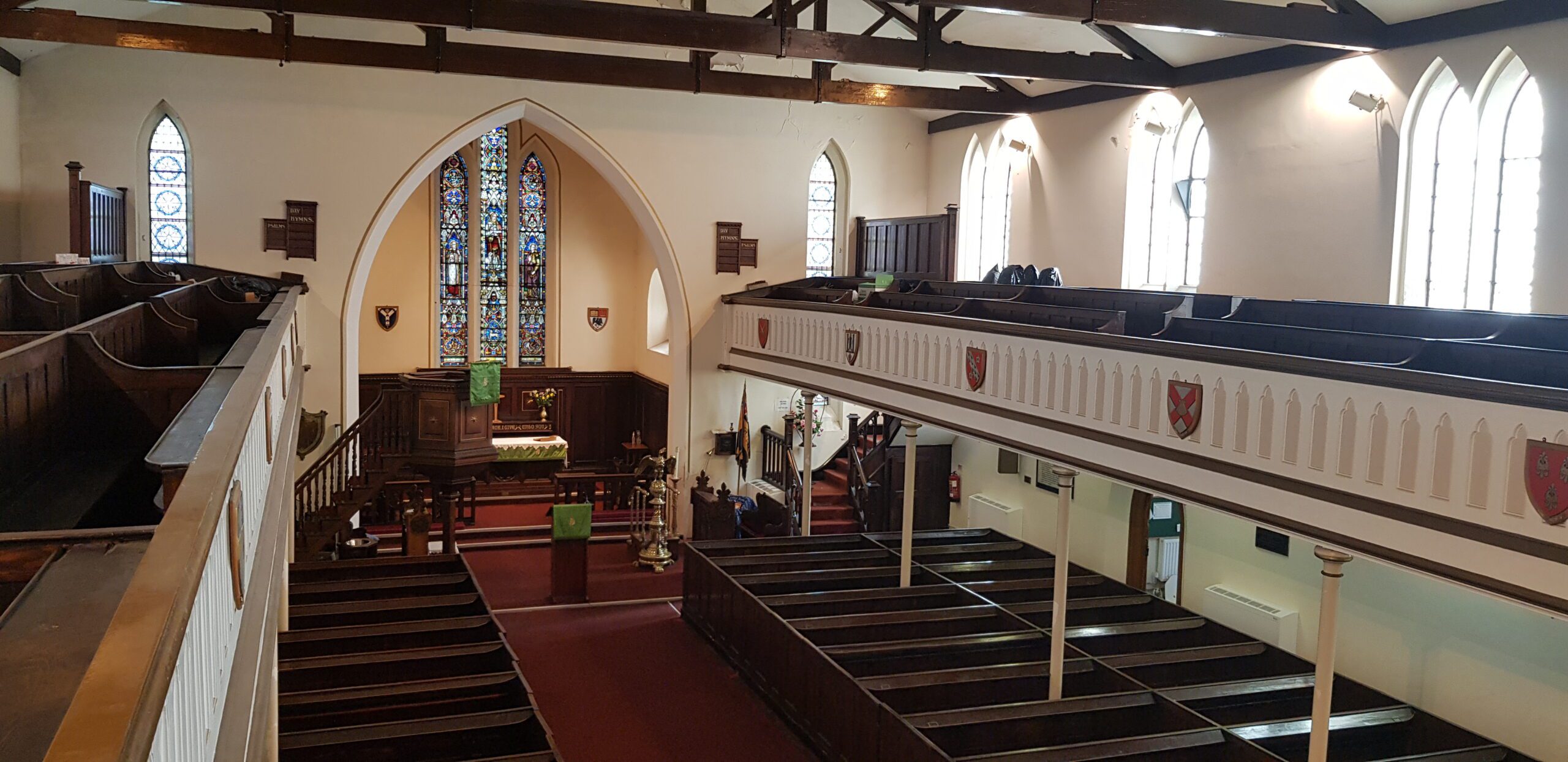
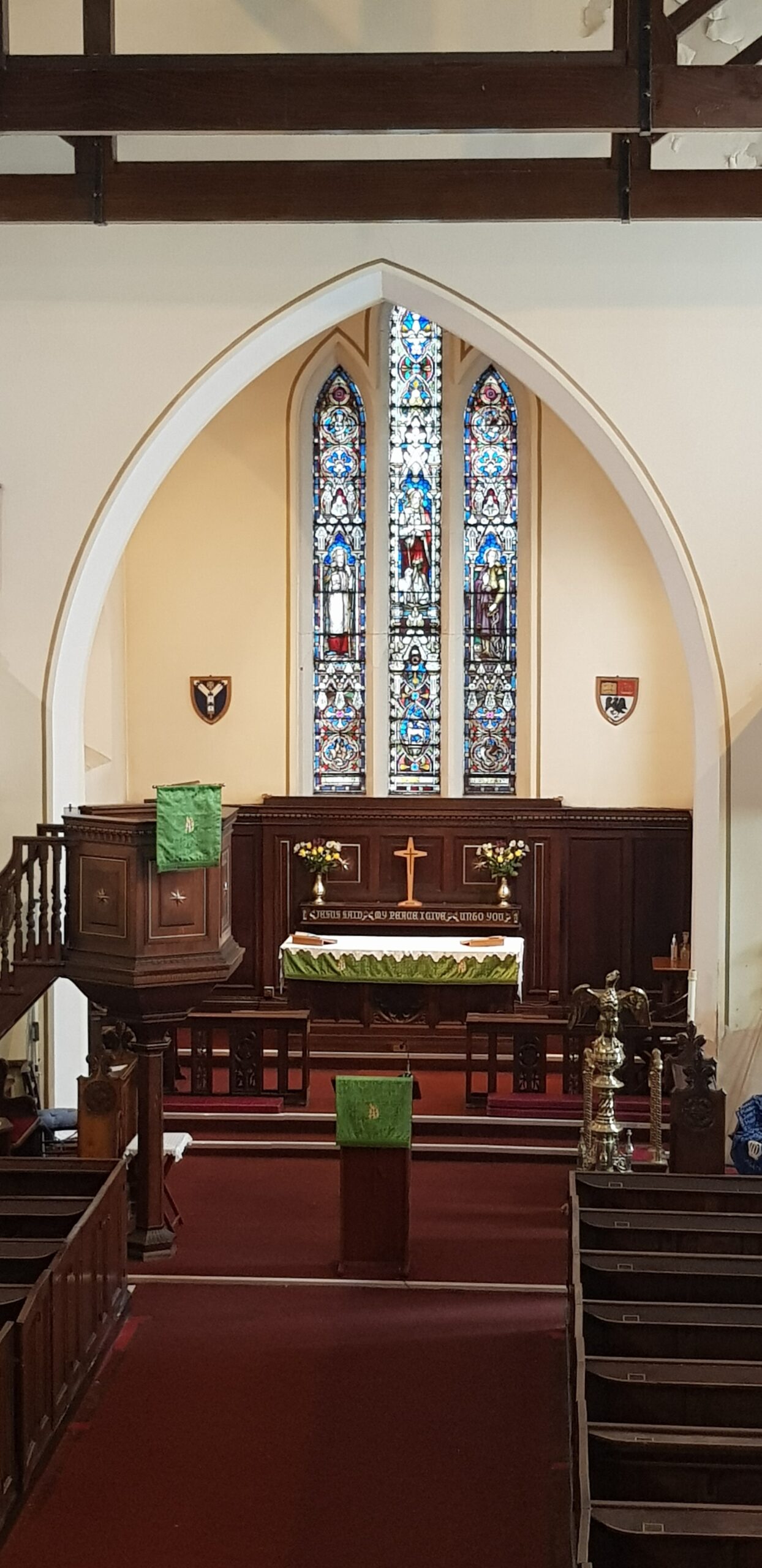
The architect of St. Catharine’s was Edmund Sharpe who was a busy man in Wigan as he was also responsible for the rebuilding of All Saints, the Parish Church. It’s a straight forward, no nonsense building. Simple, pointed windows with a short chancel which, unlike other churches in Wigan, was not rebuilt or extended as church services became more elaborate. St. Catharine’s retains its original interior, its pews and its galleries.
Like the churches in Pemberton and Haigh it’s a Church Commissioners’ Church, a ‘Waterloo Church’, the cost being partly met by the Government of the time, who were eager to establish the Church of England in towns such as Wigan with a rapidly rising population. Haigh and Pemberton were built in the early 1830s wholly at the expense of the Church Commissioners but they provided only a small part of the £3,180 it took to build St. Catharine’s ten years or so later. So where did the rest of the money come from? We simply don’t know. The land was given by John Woodcock who had been Mayor of Wigan and, with the Thicknesse family, ran Wigan Bank. Money came from somewhere to build that tower, rising high from its octagonal base.
The first vicar was Revd. William Coombs who was from Devon. In the 1841 census, when he was 25, he was living in Birkett Bank House. What a task it must have been, to establish a new church in a rapidly growing area where many people were newcomers and strangers.
But Revd. Coombs and his successors worked wonders and the parish thrived. Parish magazines give a glimpse of the fun that was had on the church’s Recreation Ground. Bowls and cricket, tennis and football. Competitive stuff. Prizes included cups (the Richard Fairhurst Memorial Cup – where is it now?), vouchers and…quilts. After the games, potato pie supper (prepared by the ladies, of course). Children’s concerts took place in the Platt Lane Mission Room which we’d love to find out about.
St Catharine’s is just so lovely with its white, bright interior and its galleries and pews exactly now as they were when they were built in 1841. A very important piece in the proud history of Wigan’s churches.
Original pews and galleries
That spire!
© Who Built Wigan's Churches 2024 - .
All rights reserved.