
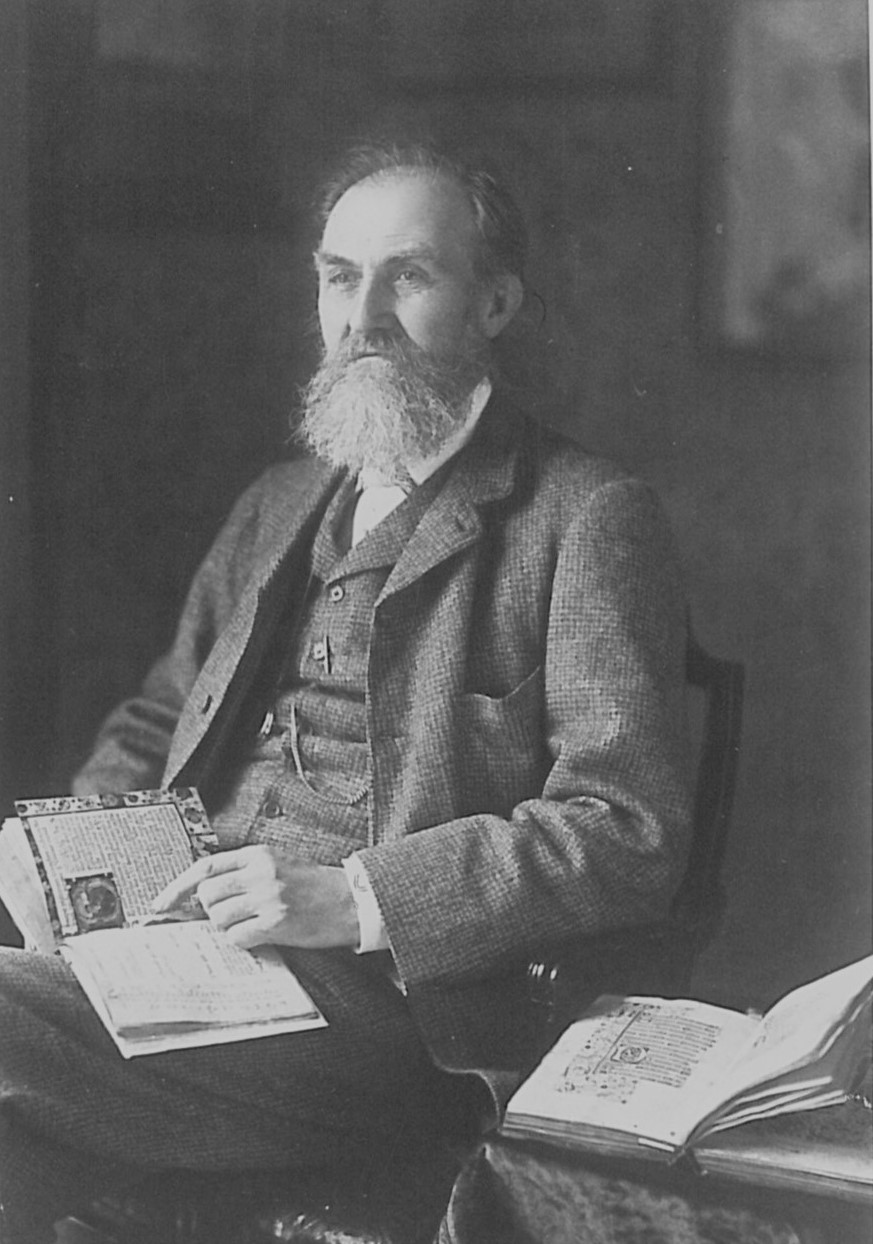
One thing that intrigues us is that a number of churches were paid for by a single family. For example, Nathaniel Eckersley, cotton mill owner, financed St. James in Poolstock. It was exciting to encounter another family, the Johnsons, in a different part of Wigan who paid for their own church, known at the time as the Johnson Memorial Chapel.
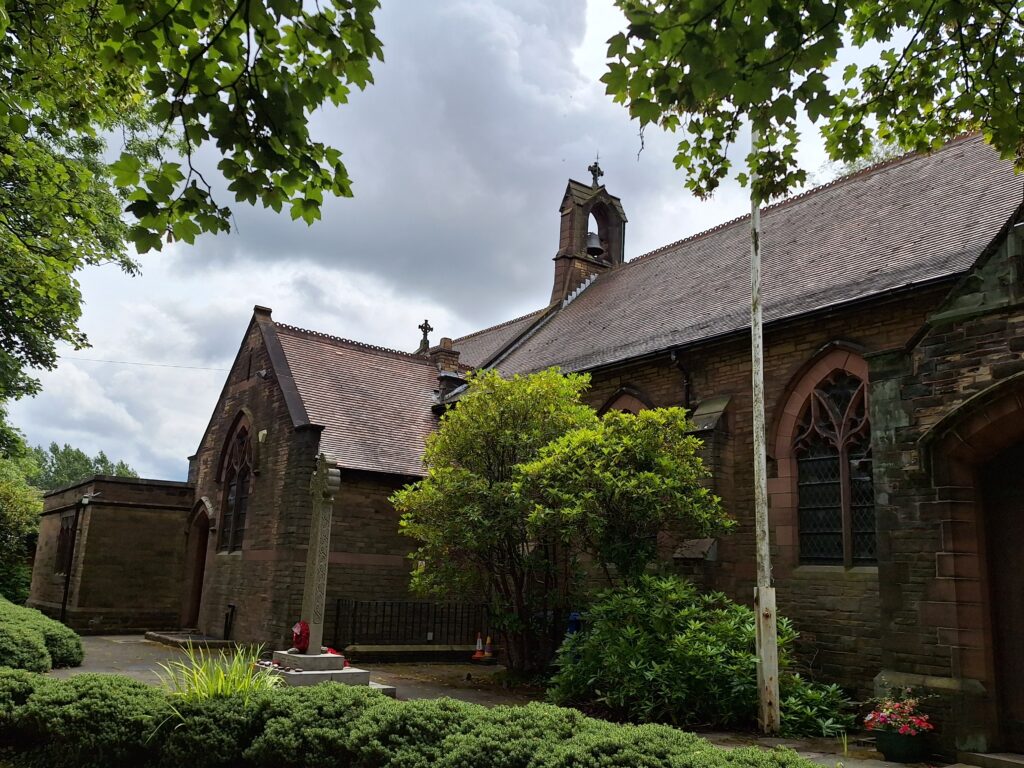
Bickershaw is a former pit village with a modest but delightful church and walking through the door one name shouts out at you, that is the Johnson family. Little did we know how fascinating the Johnsons would prove to be. We had no idea that Johnson Children’s Ward at Wigan Infirmary had been paid for by James Henry Johnson. It was in his and his wife’s memory that their children paid for St. James and St. Elizabeth church in Bickershaw in 1904.
James was born in 1829 in Lostock Graham, Cheshire. His dad was recorded as a tanner, a leather worker. By the age of 23, he had married Elizabeth Orme Scarlett Littler, the daughter of a professor of music and James was described as a colliery manager. We know that James was the manager of Strangeways Hall Colliery in Hindley and subsequently became a partner and then a director of Abram Coal Company Ltd. In the 1881 census James is described as Coal Proprietor Iron Master Employing 1500 Men so many Bickershaw families would have been in his employment. He lived at Low Green House near the pit and, as the family grew, they moved, like several other wealthy Wigan families, to Southport, to a house in North Meols.
James became a director of Wigan Junction Railways which served the coalfields to the south east of Wigan including Abram and Bickershaw. He was Chairman of Abram Urban District Council for seven years, becoming an alderman and was made a JP in 1893.
He was also a generous benefactor. In 1887, the Jubilee Year of Queen Victoria, James made a £5,000 endowment to Wigan Mining School “for the furtherance of technical education in the town and district.” An 1889 article in the Wigan Observer states that he donated £2,000 to Wigan Infirmary for the building of the Johnson Ward. And in 1895, the Observer reports that in recognition of his generosity his portrait was unveiled in the Infirmary.
James died in 1897 at his country house, Hall Garth in Over Kellet near Carnforth, leaving £303,486. He left bequests of £5,000 to charitable, religious, literary or educational purposes as he may appoint and in default thereof in such manner as his executors see fit and he expressed a wish that the inhabitants of Abram, including Bickershaw shall benefit thereof. Maybe this partly funded the building of the new church.
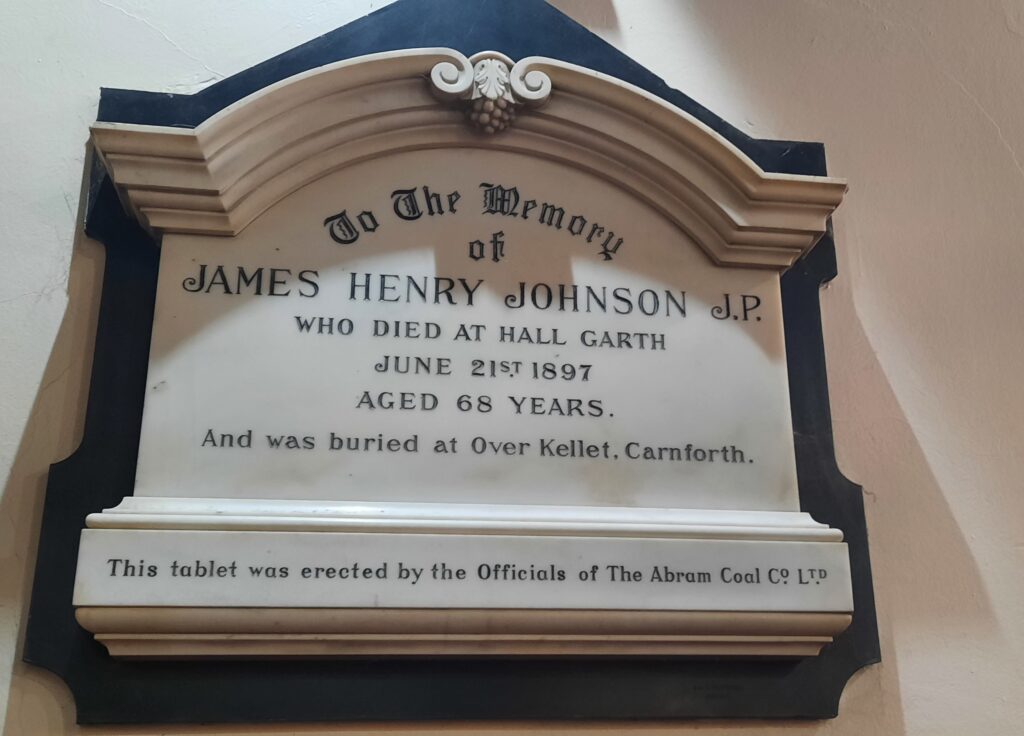
There is a plaque in the church in his memory. It reads:
“To The Memory Of James Henry Johnson, who died at Hall Garth June 21st 1897 age 68 years, and was buried at Over Kellet, Carnforth. This tablet was erected by the officials of the Abram Coal Co Ltd.”
But there are windows and other memorials which offer hints about members of his family. John and Elizabeth had 13 children, eight girls and five boys with 23 years between the youngest and the oldest, Elizabeth having her last child aged 47. Two daughters died as young women, two sons followed their dad into the mining industry. Another daughter had an extraordinary life in Surrey. James’s and Elizabeth’s grandsons fought in the First World War. We look forward to telling you more about them all.
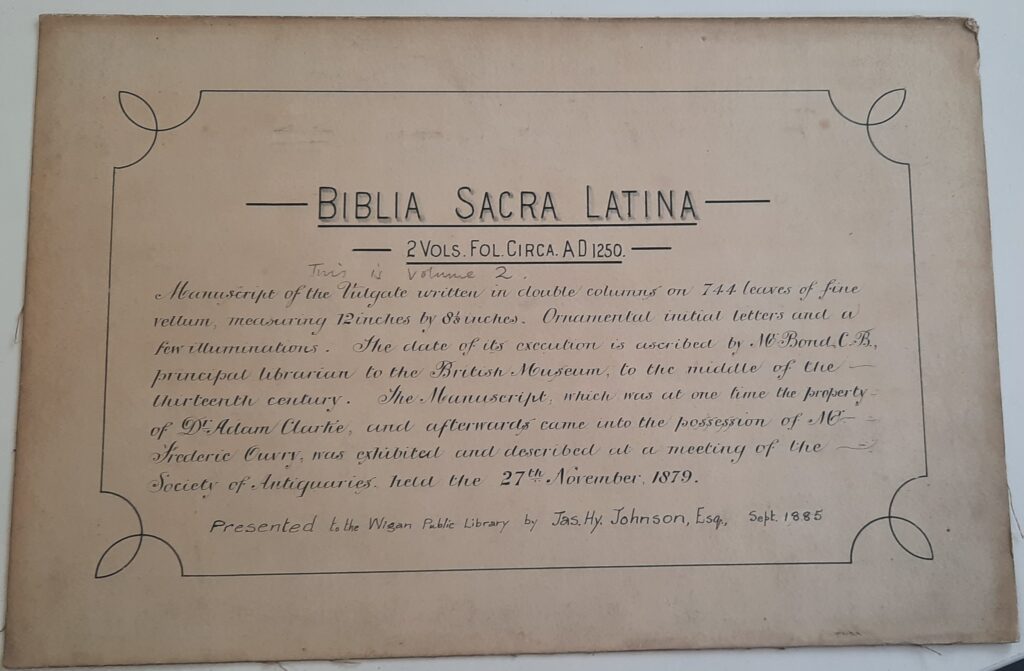
And finally, in 1884, Mr Folkard, the chief librarian in Wigan tells us that the library received a donation of a rare vellum manuscript Bible, dating from 1350 from James Johnson. Mr. Folkard describes a very elaborate Old Testament illustration where Moses is addressing the people of Israel. The bible is one of most treasured possessions of Wigan and Leigh archives and can easily be seen on request.
The Johnson family, then, helped very directly to build one of Wigan’s churches and they left their mark on others, All Saint’s, Hindley for one. What they were like as colliery bosses we don’t know. But the positive impact of the Johnson family on the Wigan area should be remembered.
Read about St. James, Poolstock, another church financed by a wealthy Wigan family, the Eckersleys.
© Who Built Wigan's Churches 2024 - .
All rights reserved.