
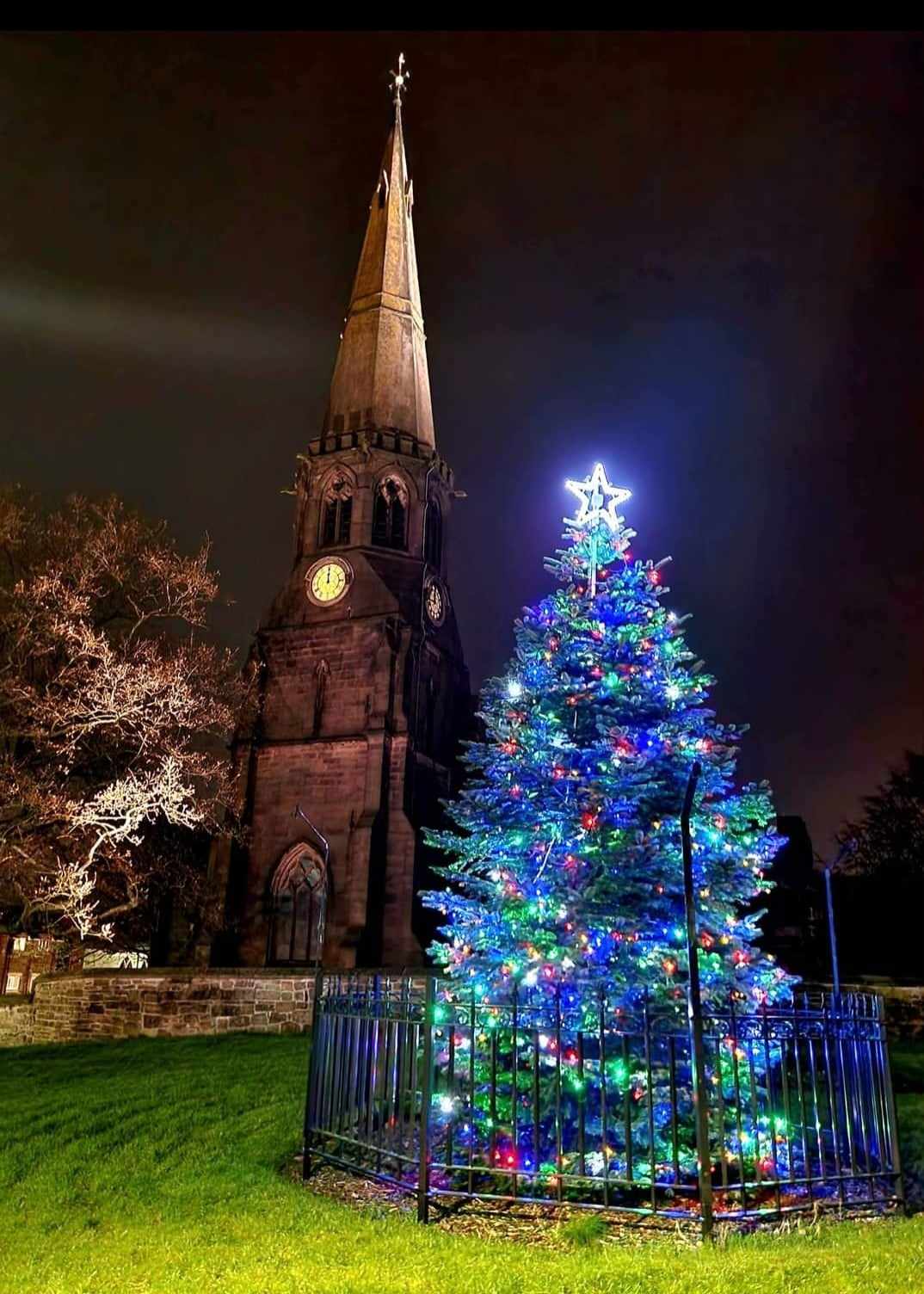
Christmas has always been an eagerly anticipated time in Wigan’s churches. Special services were organised, choirs practised, churches were decorated, cribs were unpacked and carefully arranged, Christmas Fairs and pantomimes took place and in many churches these things still happen.
So let’s just look back at Christmas in Wigan’s churches.
The Queen’s Hall in 1916 during the First World War. A Festive Orchestral Concert went ahead most successfully despite 17 members of the orchestra serving in the forces. On Christmas morning, breakfast was provided for a large number of poor children who did full justice to the meal provided. Later on in the day over 60 families sat down to a suitable Christmas meal and ‘were able to enjoy what otherwise would have been impossible’. The boys fighting at The Front hadn’t been forgotten either with parcels of comforts and sweets etc. being sent from the mission. The Queen’s Hall’s tradition of giving runs very deep.
In 1881 decorations in churches were limited to a few evergreens here and there, but on Christmas Day at All Saints, The Parish Church in Wigan there was an additional service at 10.30am and the anthem was ‘Let Us Go Even unto Bethlehem’ with Garrett’s full Communion Service being sung at the end. The anthem at evening service was ‘Unto us a Child is Born’ and the Wigan Observer tells us that the congregations were ‘fairly good’ at all the services. Whether they were referring to the congregation size or their behaviour, we know not.
We’ve yet to write about St. George’s so here goes. On 28th December 1881 we learn that a ‘very enjoyable soiree’ took place in St. George’s Schoolrooms in Church Street. The Wigan Observer goes on,
‘One of the principal features of the entertainment was the performance of a juvenile operetta, entitled ‘Red Riding Hood’ by number of the school children, in the upper room which was prettily decorated for the occasion and provided with a temporary stage neatly draped. The young people were appropriately attired and acted with accuracy and with precision. In the intervals of the operetta, and also afterwards, Miss Kay and Messrs. McClure, Armstrong, and Coombs rendered several songs, duets, and quartets with their usual success, the accompaniments being in the bands of Mr. J. Dawber.
In the room below there was large and heavily laden Christmas tree, and refreshment stall, and, to use the words of the programme, “costume bon-bons, galvanic batteries, snap dragons and other seasonable games” were provided, over which Father Christmas presided.” The room was decorated with Chinese lanterns, evergreens, festoons, etc, and presented a handsome and Christmas-like appearance. The games were kept up with great zest, and the visitors seemed to thoroughly enjoy themselves’.
In the same year on Boxing Day at what’s described as St. Andrew’s, Marsh Green, there was the Annual Christmas Tea Party. In a tastefully decorated room and in front of an unusually large audience, songs performed included well know numbers such as ‘The Boggart at Stump’, ‘Kitchen Rebellion‘ and ‘How to Raise a Wind.‘
In 1906, Gidlow Methodist (the iron church) also enjoyed Christmas. There was a ‘lime-light’ entertainment with Mr. Wade (Senior) and Mr. Tom Wade producing excellent effects upon the canvas with about 100 slides being exhibited (some sort of Magic Lantern Show presumably). Inevitably there was also musical accompaniment with Mrs. Wade (third member of the family?) performing ‘Daisy’s Influence’ while others recited ‘Billy and Betty at Belle View’.
The carolling (carol singing?) raised about £7 and the trustees ‘heartily thanked their friends who have again assisted materially the work of the mission’.
More recent times. Pantomimes at St. John’s, Pemberton were eagerly awaited, said by many to be the best in Wigan.
The 1951 Christmas Fayre at St. Matthew’s, Highfield was to be held on Saturday December 1st. Admission 6d. The November Parish magazine sets out to whet parishioners’ appetites by listing a visit from Father Christmas and a Grand Concert. We are given more details:
The following duties have been allocated to Parochial Organisations (provisionally)
Parish magazines rarely look back. There’s no account of how the Christmas Fayre went in the next magazine. There was no need. Everyone who mattered was there and experienced it for themselves. We assume they all enjoyed it, raised some money and got well and truly into the Christmas spirit.
In our memory we remember the pantomime in the 1960s and 1970s at St. Michael’s Parish Hall in Swinley with Jack Bradley and Cissie Hooper literally bringing the house down. I (Will) remember the sheer excitement and magic of singing in the choir at Midnight Communion at the Parish Church.
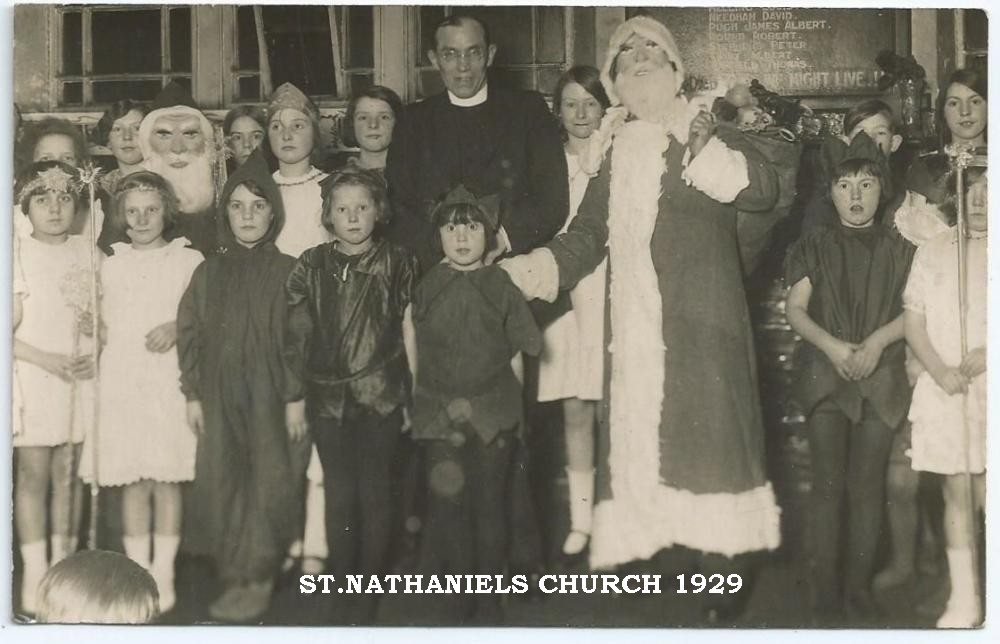
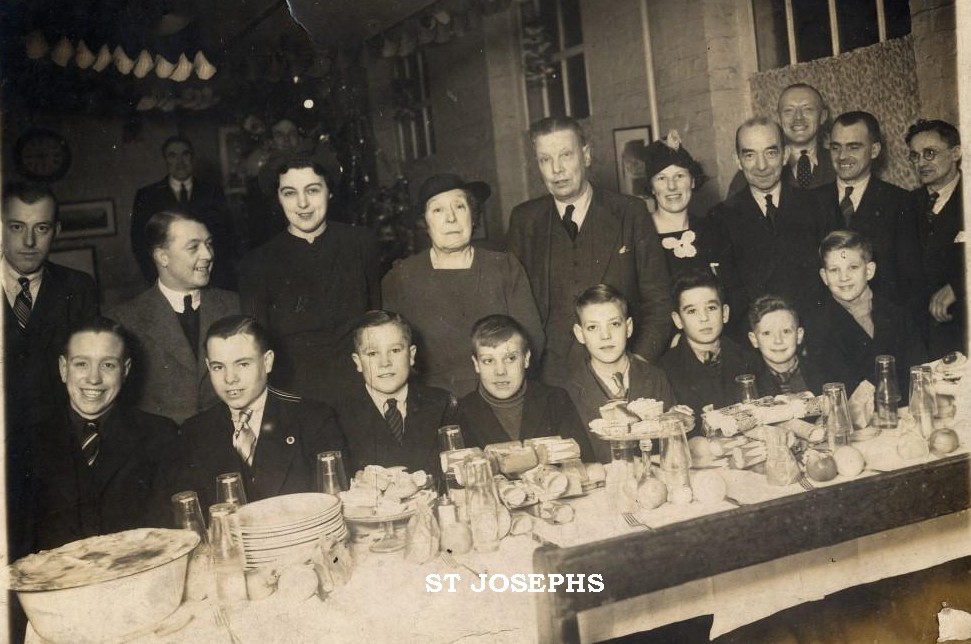
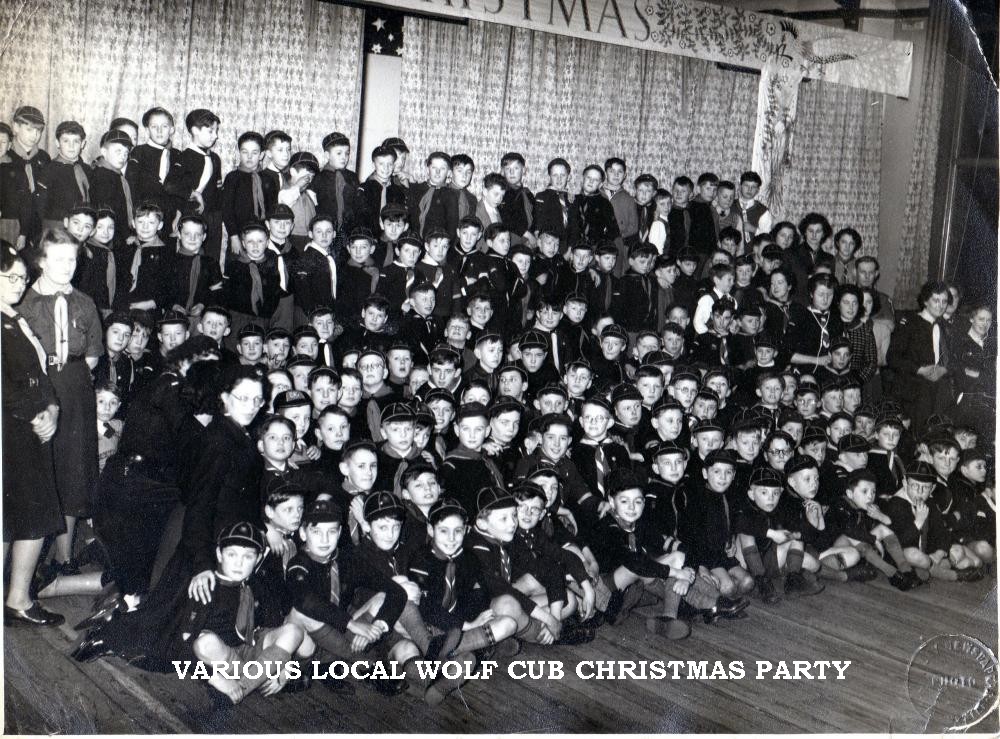
With Ron Hunt’s help we searched WiganWorld for photographs of church Christmas events. Surprisingly there appear to be very few on the site. There must be hundreds of great photographs out there. Please have a look what you tucked away in those boxes and albums.
Social events weren’t confined to Christmas, read about ‘That Do Again’ at St. Anne’s, Beech Hill in 1952.
© Who Built Wigan's Churches 2024 - .
All rights reserved.