
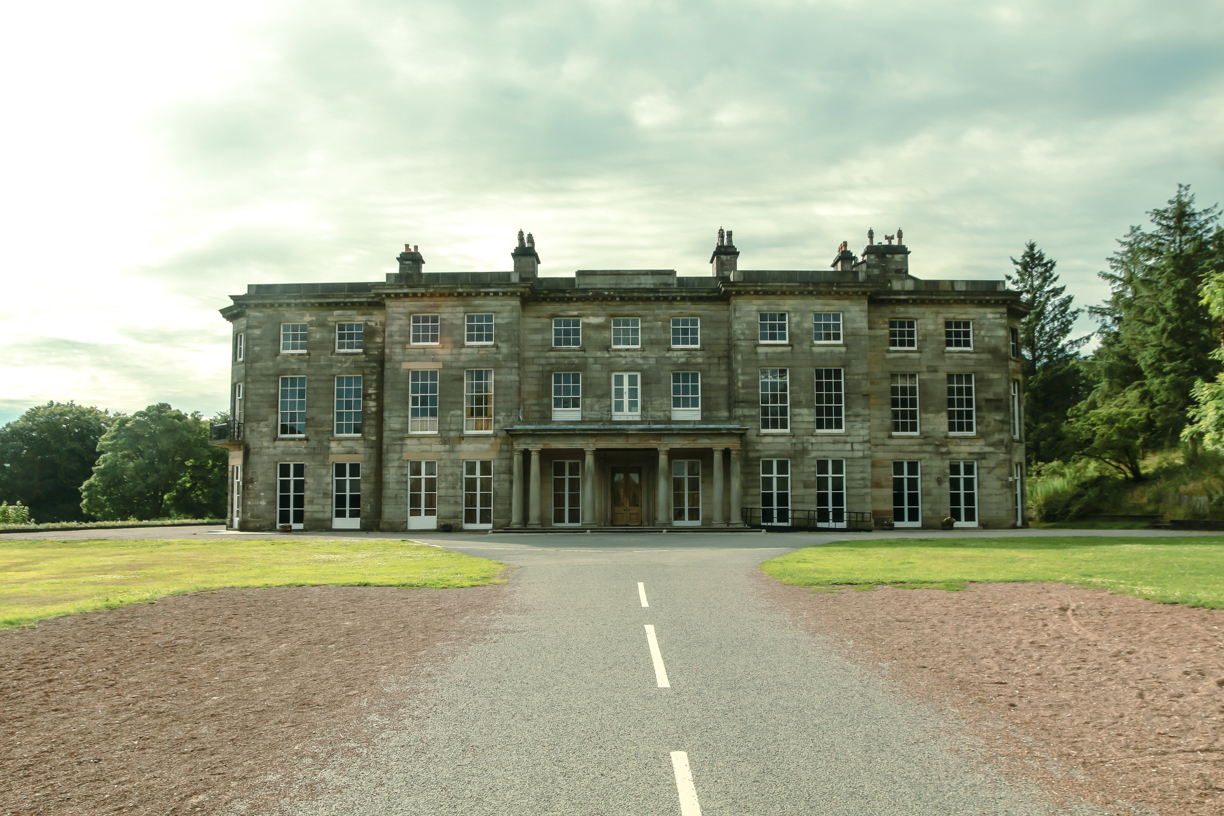
With their aristocratic status, wealth, land and business interests, it comes as no surprise that the Crawford family, the Earls of Balcarres (from 1848 the Earls of Crawford and Balcarres), were heavily involved in building, extending and enhancing Wigan’s churches. They lived, of course, at Haigh Hall and owned pits, ironworks and farms in the Haigh and Aspull area, even naming one colliery with their family name of Lindsay. Hundreds of local people were employed by them at the Hall, on their farms and down their pits and at their ironworks. The Crawford wealth was made, at least in part, by the sweat and toil of generations of Wiganers.
They had their own private chapel and pew at All Saints, the Parish Church, in the town centre where earlier Earls were buried and where members of the Bradshaigh family, an ancient Wigan family into which the Crawfords married, were also laid to rest. That chapel, known as the Crawford Chapel, is still there to the south of the main altar and the family vault, we believe, is beneath it.
It comes then as no surprise to learn that the family were closely linked to the town’s churches especially in the area near to Haigh Hall. So here, according to our research so far, is the role played by each Earl from the building of St. David’s Haigh in 1832 to the years just before the family left Haigh Hall in 1947.
James Lindsay, 24th Earl of Crawford, 7th Earl of Balcarres, Earl 1825-1869
James rebuilt Haigh Hall, the building we know today. While supervising the work on the Hall he fell off the scaffolding sustaining a serious injury.
James gave the land and the stone for the new church of St. David’s in Haigh. He was determined to get a private pew made for his family’s sole use and it was constructed on the gallery at the west end of the church with its own private entrance.
In the 1840s James played an important role in the debate about the rebuilding of All Saints, the Parish Church. At first he appeared to have been opposed to a new church building, favouring repair of the old church, but later agreed to a rebuild on the condition it was a copy, a ‘better copy’, of the old church. He paid £1,059 for the rebuilding of his own chapel.
James was buried in All Saints, the Parish Church and his monument can be seen in the Crawford Chapel.
His fourth son Colin became Churchwarden in 1845 and actively supported the rebuilding of the rest of the church. The Crawford family gave over £1,000 towards the cost and Colin encouraged many others to donate to the rebuilding.
Alexander William Crawford Lindsay, 25th Earl of Crawford, 8th Earl of Balcarres, Earl 1869-80
Alexander, a learned academic, travelled widely studying art. He died in Florence and was buried on the Crawford’s family estate in Scotland. His grave was broken into and his body stolen. It was later recovered and reinterred in Wigan in the Crawford Chapel in All Saints, the Parish Church.
In 1871 Alexander ‘provided for’ the erection of a temporary church, an ‘iron church’ near the Sawmills at New Springs. Countess Margaret, his wife, supplied many of the furnishings, ornaments and plate and fitted out the new church internally.
Alexander contributed £750 in 1877 towards the total cost of £8,000 to build St. Michael and All Angel’s church in Swinley. Countess Margaret and their two elder daughters, Lady Mary and Lady Alice, attended the Grand Luncheon held after the Consecration Service to mark the opening of the church in 1878. His son, James (Lord Lindsay), gave £250.
Alexander contributed £1,200 towards the total cost of £6,500 of St. Elizabeth of Hungary church in Aspull. Roger Leigh, his neighbour at Hindley Hall, gave £5,300. The Earl died before the church was consecrated in 1882 and his memorial is to be seen in the Crawford Chapel.
James Ludovic Lindsay, 26th Earl of Crawford, 9th Earl of Balcarres, Earl 1880-1913
James was a famous astronomer and a book collector. His private yacht, the Valhalla, had six staterooms and a crew of over 100.
James was present at the service when, in 1887, the new, larger chancel was consecrated in St. David’s Haigh. We’ve been unable to find out if he contributed to the cost of £2,700 but it seems impossible that the work went ahead without his agreement and support.
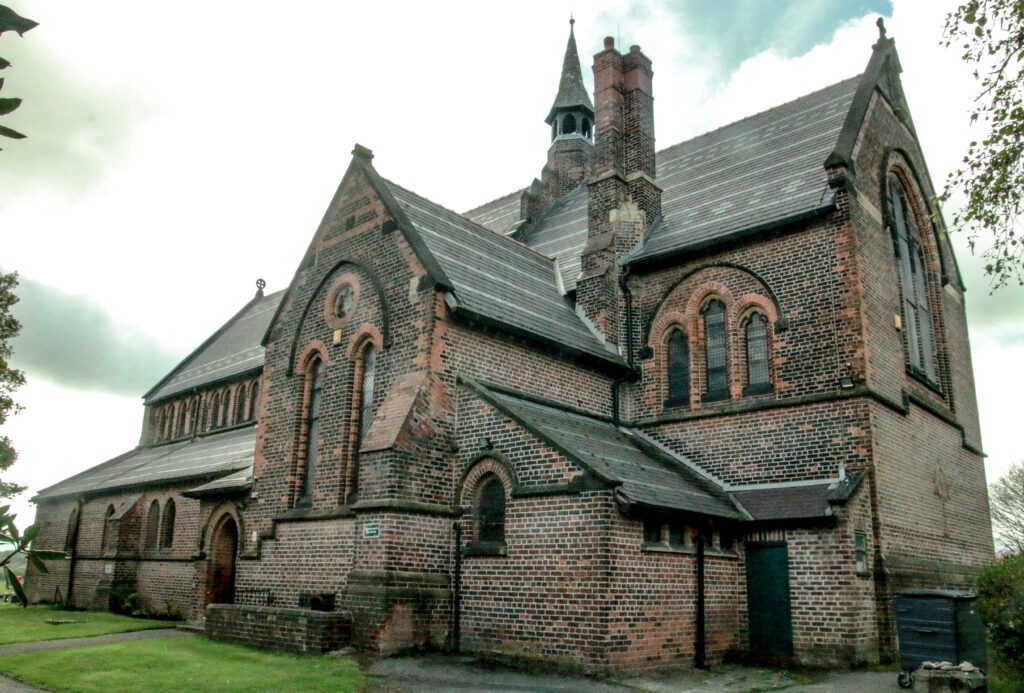
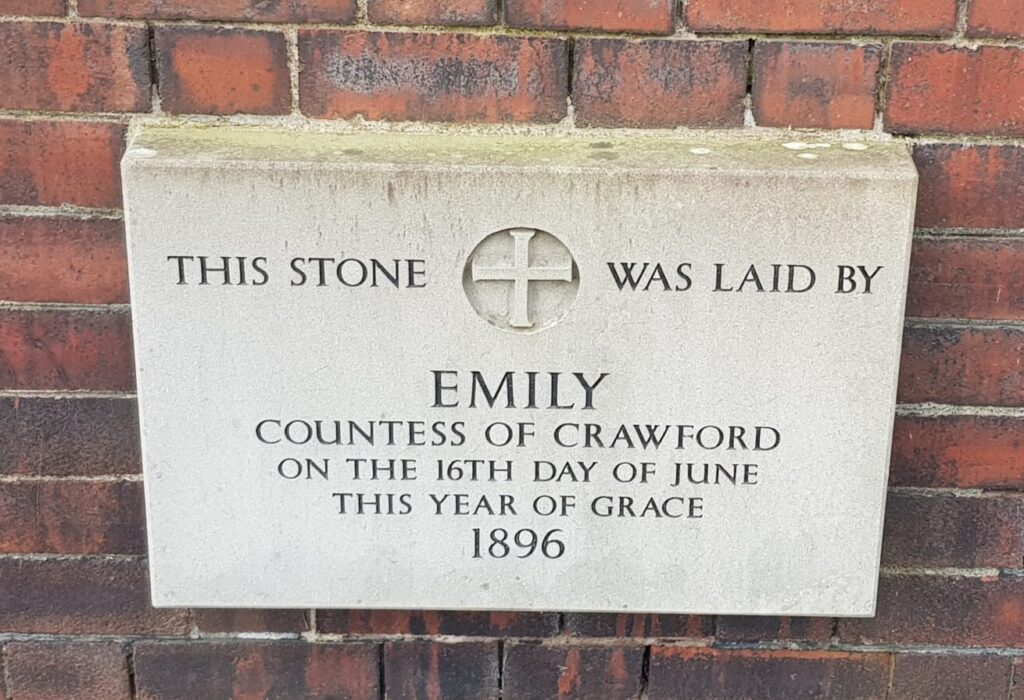
He offered a site for a new permanent church but it was deemed unsuitable and an alternative site was found. Countess Emily, his wife, laid the Foundation Stone of St. John the Baptist in 1896. This can still be seen on the exterior of the church, her name clearly visible.
Countess Emily, with her son David, attended a Joint Bazaar held in the Pavilion situated at the bottom of Library Street, in the early 1900s to raise funds for the proposed new church of St. Stephen’s in Whelley.
About 1904 James offered a site for the proposed new church in Whelley but the urgent need for repairs to the school (which also served as the area’s Mission Church) meant that the building of the new church was postponed. His son, David, was able to help some 24 years later.
David Alexander Edward Lindsay, 27th Earl of Crawford, 10th Earl of Balcarres, Earl 1913-40
Served in Royal Medical Corps in the First World War, afterwards was a member of Lloyd George’s Cabinet.
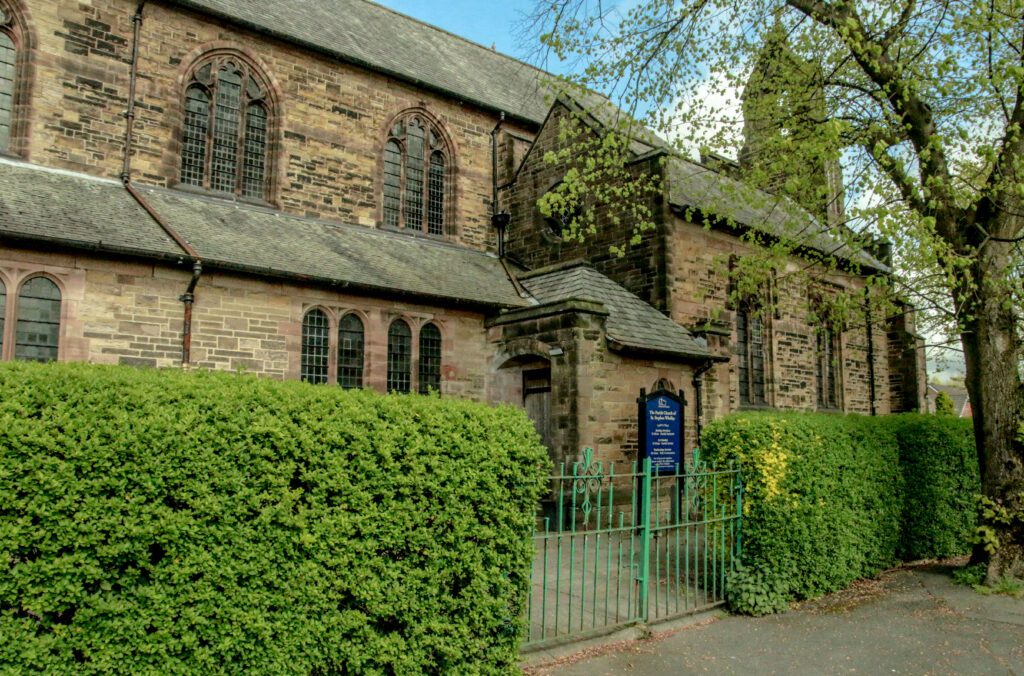
David laid the Foundation Stone of St. Stephen’s Whelley in 1928 having gifted the piece of land on which the church was built. We have yet to establish if he or other members of the family attended the Consecration Service in 1930.
In 1938 a letter was written from the Estate Office at Haigh Hall on David’s behalf to the vicar of St Stephen’s to discuss the offer from the Earl of trees to improve the church grounds.
David Lindsay, 28th Earl of Crawford, 11th Earl of Balcarres, Earl 1940-1975
David was Conservative MP for the Lancaster seat of Lonsdale and later, Chairman of the National Trust.
We assumed that with the sale of Haigh Hall in 1947 the involvement of the Crawford family in Wigan’s churches would have ended. But in 1958 we found that David opened Ince in Makerfield Church of England School and unveiled the commemorative plaque (where is it now?)
In summary, the Crawford family had their own chapel in the Parish Church where a number of them were buried. They had their own private pew at Haigh. The main focus of their involvement with the town’s churches was , understandably, with those in or near their estate – the churches in Haigh, Aspull and New Springs and St. Michael and All Angels in Swinley so close to the gateway to the Haigh Estate on Wigan Lane. The family gave money and land, supported fund raising events and, as the local aristocrats, laid Foundation Stones in formal ceremonies.
It’s highly likely that there are other examples of the Crawford family supporting and financing Wigan’s churches.
© Who Built Wigan's Churches 2024 - .
All rights reserved.