
St Matthew’s church in Highfield, the only cruciform (cross-shaped) church in the Wigan area with a central spire, is built inside and out from fine red dressed Cheshire sandstone. With its graceful spire it is a distinctive landmark visible from many parts of the town. It’s almost suburban in its setting now with the 1960 housing estates stretching out towards Winstanley but maps show that until the 1950s the area east of the church towards Goose Green was dominated by the massive Pemberton Collieries complex. In 1893, the year of the church’s consecration, the pits were owned by Colonel Henry Blundell-Hollinshead Blundell (1831-1906) and he is the gentleman who, single handedly, paid for St. Matthew’s.
Blundell was definitely ‘top drawer’ having been educated at Eton and Oxford and during a military career lasting 30 years, he fought in the Crimea and in the Nile Exhibition which attempted unsuccessfully to rescue General Gordon. He became Conservative MP for Ince and presumably settled down taking a more direct interest in the pits he owned and the people he employed.
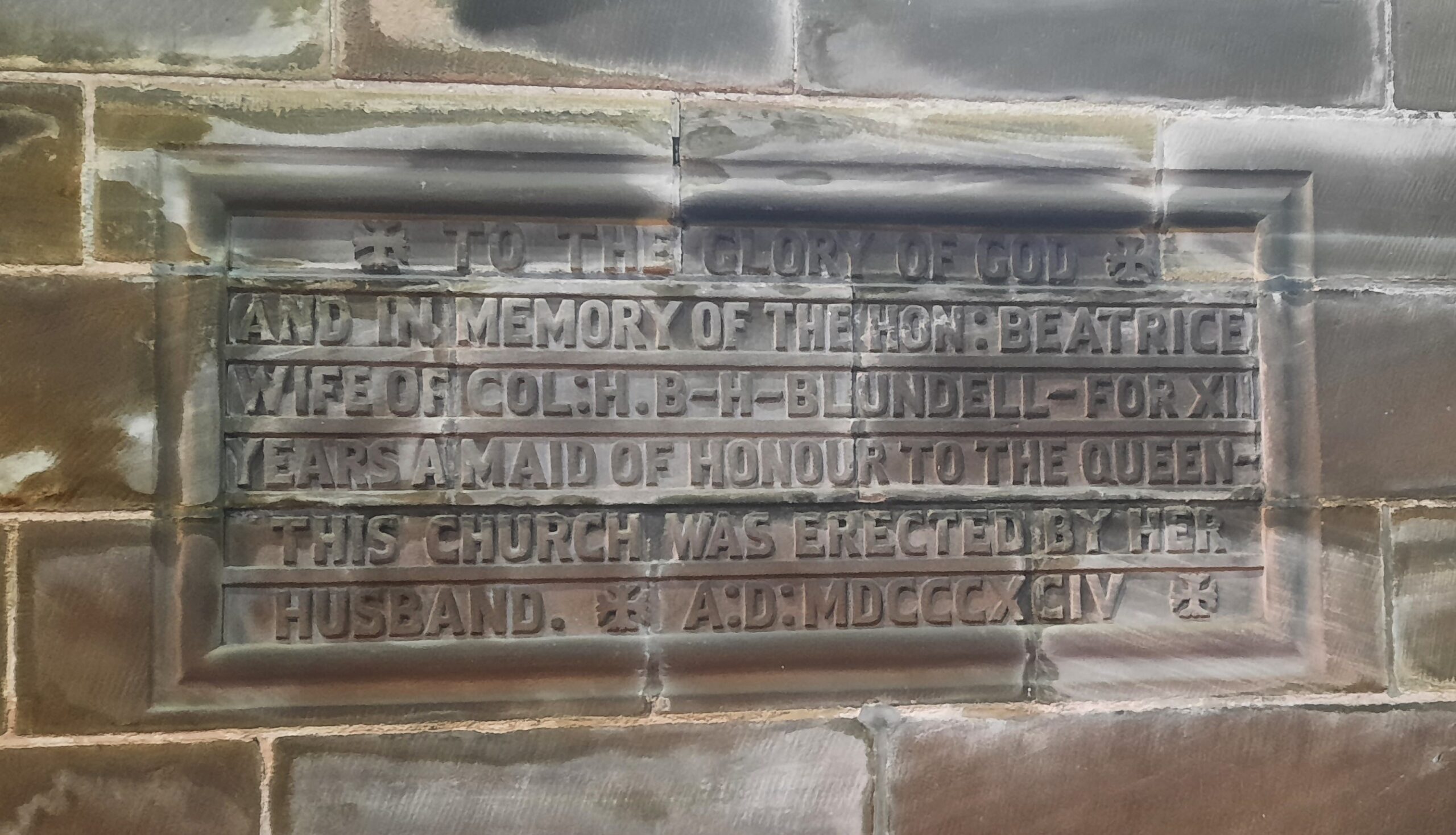
But even while Blundell was still serving in the army he provided the people of Highfield, many of whom he employed, with a church, an ‘iron church’ opening in 1867 which also served as a school. They worshipped at God’s ‘house on the corner, our Little Iron Church’ until 1893 when the present St. Matthew’s Church was opened. Blundell built the church in memory of his wife Hon. Beatrice Eliza Christiana Catherine Byng , one time Lady in Waiting to Queen Victoria, who had died in 1884 and for her only the best was good enough, the church costing £10,000 and thought to be one of the finest designed by the Lancaster firm of Paley and Austin.
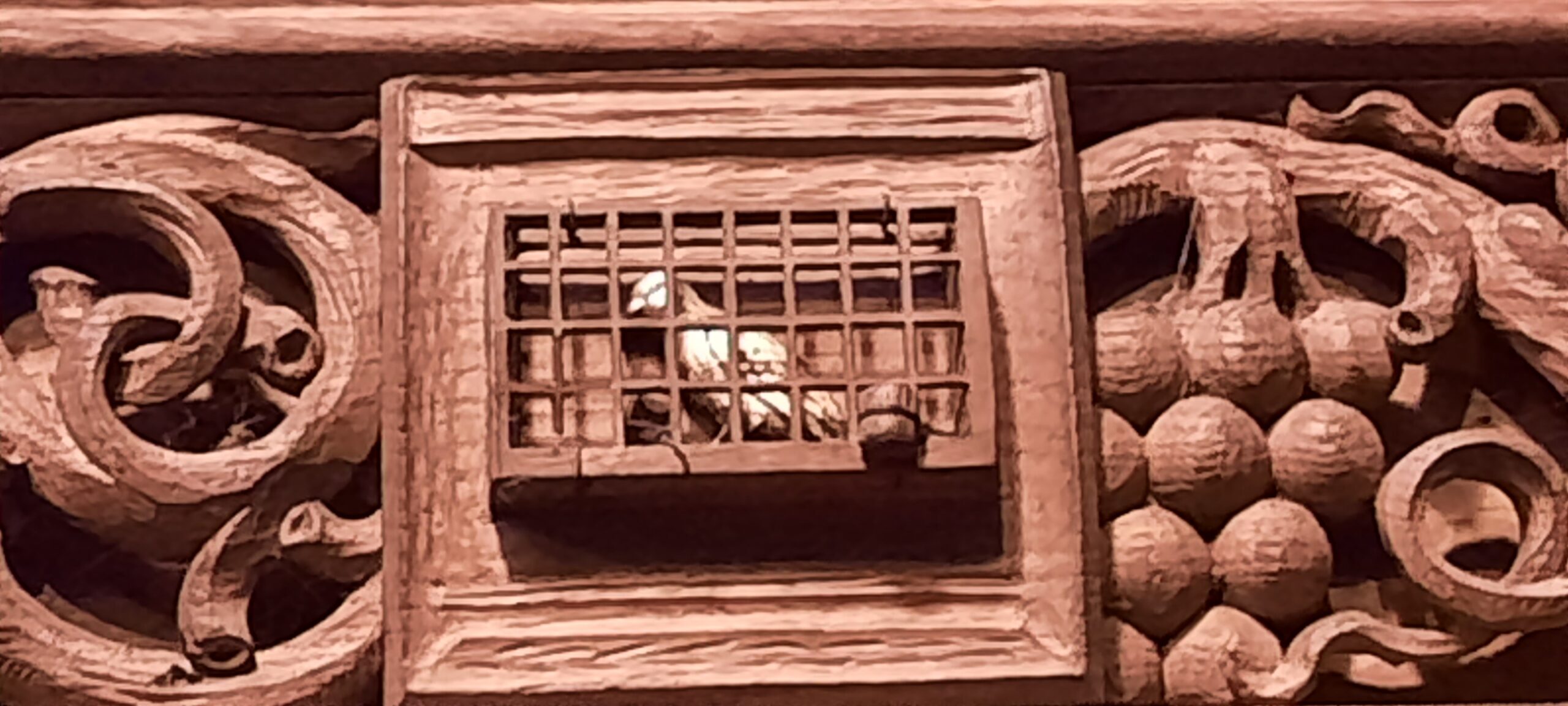
The church was extended to the west in 1910 and the carved stone reredos was erected in 1917 in memory of the church’s founder, Colonel Blundell. Inside all is grand and finely crafted, the beautifully carved arches over the windows in the chancel deserving a close look. The four grand pillars in the centre of the church support the great weight of the tower and the spire. In the chapel on the north side are three modern stained-glass windows all the work of Yorkshire based Harry Harvey (1922- 2011). They’re wonderful. They commemorate a long serving verger and other loyal parishioners. Pit head gear, a Blundell’s coal wagon, a car mechanic and a lady knitting with her daughter coming to greet her are all depicted. And on the other side is a wooden screen erected in 1946, on the very eve of Nationalisation, by Pemberton Colliery to remember all those who had worked in their mines. Beautifully caved reminders of the mining industry take pride of place across the top including a pick and shovel, a miner’s lamp, and a canary in its cage.
Situated in a beautifully kept churchyard and with a fascinating graveyard (look out for the War Memorial form ‘Slipper Factory’ demolished long ago) St Matthew’s really is worth a visit.
Built from beautiful red sandstone inside and out
Reminders of local coal mining history inside the church

© Who Built Wigan's Churches 2024 - .
All rights reserved.